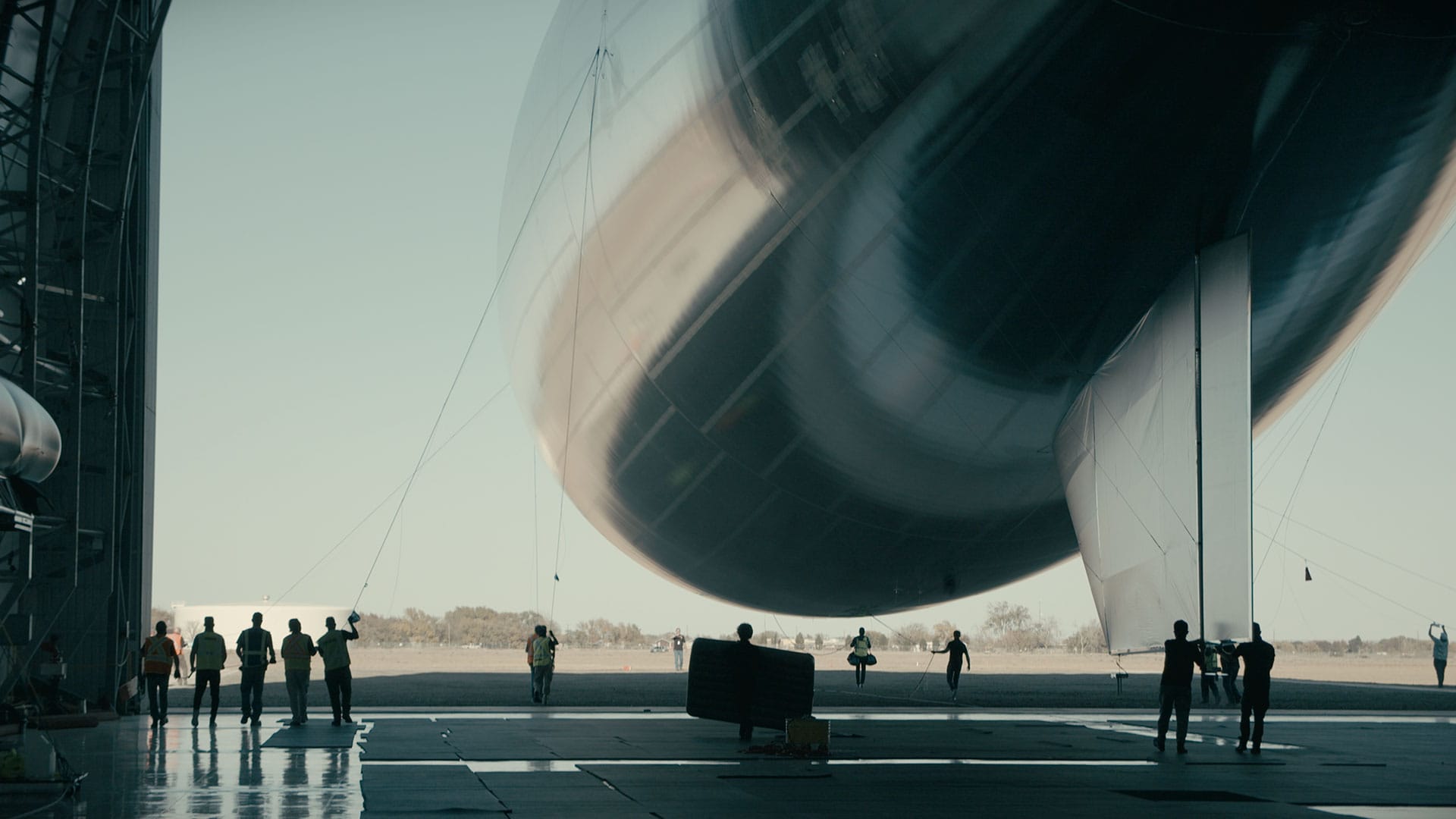
What Are High-Altitude Platform Stations (Haps) Explained
1. HAPS occupies a sweet spot Between Earth and Space
Don't make the mistake of comparing ground towers versus satellites orbiting. High-altitude platform stations are operating in the stratosphere. They're typically between 18 and 22 kilometers above sea level. an atmosphere that is that is so stable and steady that an aircraft designed properly can keep its location with a remarkable accuracy. This altitude is large enough for massive geographical footprints by a single vehicle yet it is close enough to Earth the signal latency stays low and the device doesn't require a long-term battle with the savage radiation conditions of space orbit. It's an incredibly underexplored band of sky, and the aerospace world is only now taking the first steps to make it a reality.
2. The Stratosphere is More Calm Than You'd Think
One of the most surprising truths about stratospheric flying is how stable the air is in comparison to the turbulent Troposphere below. These winds at cruising altitudes are comparatively gentle and uniform which is vitally important for station keeping, which is the ability of the HAPS vehicle to stay in the exact location above the target area. For earth observation, telecommunications or other missions, even several kilometres away from its position can result in poor coverage. Platforms engineered for true station keeping, like those designed by Sceye Inc, treat this as a primary design consideration rather than an additional consideration.
3. HAPS Stands for High-Altitude Platform Station
The word itself is worth a look. Platform stations with high altitudes are defined in ITU (International Telecommunications Union) frameworks to be a base station on an object at an altitude of between 20 and 50 km in a specified, nominal and fixed location with respect to Earth. This "station" section is intentional — these aren't research balloons drifting across continents. They're telecommunications or observation infrastructure, held on station which are performing continuous missions. They are less like aircraft, and more as low-altitude, reusable satellites. They have the ability in returning, being serviced as well as redeployed.
4. There are different types of vehicles Under the HAPS Umbrella
There are many variations of HAPS vehicles look the exact same. The class comprises solar-powered fixed-wing aircraft, lighter-than-air airships, as well as tethered balloon systems. All have trade-offs involving capacity of payloads, endurance, and cost. Airships, for instance, allow for heavier payloads to be carried over longer periods since buoyancy does most of the lifting work, freeing up solar energy to power propulsion, stationkeeping, along with onboard technology. Sceye's strategy employs a lighter-than-air model specifically designed for airships to maximize payload capability and mission endurance and mission endurance. It is a thoughtful architectural choice that separates it from fixed-wing competitors striving to beat altitude records using a minimum weight.
5. Power Is the Central Engineering Challenge
Maintaining a platform high in the in the stratosphere to last for months or even weeks without replenishing fuel is solving an energy equation that has small margins for error. Solar cells are able to capture energy in daylight hours, however this platform must withstand nights on batteries. This is when battery energy density becomes a crucial factor. Modern advances in lithium sulfur battery chemistry — with energy densities at or near 425 Wh/kg make stratospheric endurance missions increasingly feasible. When combined with improved solar cell efficiency, the ultimate goal is a closed power loop by generating and storing enough energy each diurnal cycle to ensure that the operation continues uninterrupted.
6. The Coverage Footprint is awe-inspiring as compared to Ground Infrastructure
A single high altitude platform station at 20km altitude could make a footprint on the ground of hundreds of kilometers. A typical mobile tower covers a few kilometres at best. This gap in coverage can make HAPS particularly appealing to connect isolated or under-served regions where creating infrastructure for terrestrial use is economically infeasible. A single spacecraft can take on the task that would otherwise require hundreds or thousands of ground assets, making it one of the most likely solutions to the ever-growing global connectivity gap.
7. HAPS Can Carry Multiple Payload Types at the Same Time
As opposed to satellites that typically have a fixed mission plan at beginning, stratospheric platforms have the ability to carry multiple payloads and be changed between deployments. A single vehicle could be equipped with an antenna that delivers broadband along with sensors for greenhouse gas monitoring and wildfire detection. It could also be used for oil pollution monitoring. The multi-mission flexibility is one of the most economically convincing arguments in favor of HAPS expenditure — the identical infrastructure supports connectivity as well as climate monitoring simultaneously rather than requiring separate dedicated assets for each job.
8. The Technology enables Direct-toCell and 5G Backhaul Applications
From a business perspective one of the things that most makes HAPS especially interesting is its ability to work with existing device ecosystems. Direct-to cells allow phones of any type connectivity without the need for additional hardware, and the platform serves as a HIS (High-Altitude IMT Base Station) (which is really a cell tower that is in the sky. The platform can also be used for 5G backhaul by connecting remote infrastructure on the ground to more extensive networks. Beamforming technology enables platforms to target signal precisely to the area where demand is rather than broadcasting in an indiscriminate manner thus increasing the spectral efficiency substantially.
9. The Stratosphere Is Now Attracting Serious Investment
What was a niche research field 10 years ago has drawn significant investment from major telecoms players. SoftBank's agreement with Sceye on a planned nationwide HAPS technology in Japan that will be focusing on pre-commercial services in 2026, represents one of the most significant commercial commitments for stratospheric connectivity to today. It signals a shift from HAPS being viewed as an experiment to being treated as deployable and revenue-generating infrastructure — an affirmation that's important to the wider business.
10. Sceye Represents an Innovative Model for a Non-Terrestrial Infrastructure
The company was founded by Mikkel Vestergaard, and located in New Mexico, Sceye has established itself as a major long-term player in what is an area of aerospace that is truly frontier. The company's desire to blend the ability to endure, payload capacity as well as multi-mission capability, is an indication of a belief that stratospheric platforms are likely to become a constant layer of infrastructure across the globe which is not a novelty or gap-filler or a gap-filler, but a truly third tier, positioned between terrestrial networks and satellites on orbit. For connectivity, monitoring of climate, or disaster response, high elevation platforms are beginning to look less like a fascinating concept and more like a logical part of how humanity monitors and connects to its planet. Check out the top Sceye Inc for blog advice including Lighter-than-air systems, sceye haps status 2025 2026, Diurnal flight explained, Sceye stratospheric platforms, softbank investment sceye, Sceye Softbank, SoftBank investments, Wildfire detection technology, japan nation-wide network of softbank corp, sceye haps status 2025 2026 and more.

How Stratospheric Platforms Influence Earth Observation
1. Earth Observation Has Always Been Constrained by the Observer's position
Every step in the human race's ability to keep track of the planet's surface has come from finding the best vantage point. Ground stations provided local precision but had no reach. Aircraft added range, but used up fuel and required crews. Satellites delivered global coverage but brought distance, and this traded resolution and revisit frequency against scale. Each increment in altitude has solved a few issues, but also created more, and the tradeoffs built into each option influence what we know about the planet we live on and, most important, what we do not have enough clarity to make decisions about. Stratospheric platforms give us a view which is located between aircraft and satellites in ways that can resolve several of the most difficult trade-offs rather than simply shifting them.
2. Persistence Is the Observation Capability that alters everything
The most significant thing the stratospheric technology can provide to earth observation. The key to this is not precision, not the area of coverage, and definitely not sensor sophistication. It is persistence. The capability to view the same location over time, for days or weeks at a given time, without gaps in the records of data, is a change in the kind of questions that earth observations can answer. Satellites help answer questions on state and state of affairs. What does this location appear like at this moment? Persistent stratospheric stations answer questions concerning process — what's happening in this particular situation in what pace, driven by what factors and when do interventions become necessary? To monitor greenhouse gas emissions, flood progression, wildfire growth and the spread of pollution to coastal areas issues related to process are ones that influence decision-making They require constant observation that only observation over time can provide.
3. It is believed that the Altitude Sweet Spot Produces Resolution That Satellites Do Not Match at scale
Physics determines how to relate the sensor aperture, altitude and resolution of the ground. A sensor with a resolution of 20 kilometers can produce figures of ground resolution that would require an impractically large aperture to reproduce from low Earth orbit. This means that a stratospheric observation platform can separate individual infrastructure components like pipes, tanks for storage agriculture plots and coastal vessels- that appear as sub-pixel blurred in satellite imagery at similar costs to sensors. This is especially true for applications such as monitoring the spread of oil pollution around an offshore facility in particular or determining the exact location of methane leaks in a pipeline corridor or following the leading edges of a wildfire in complicated terrain, this resolution advantage directly impacts the accuracy of the information accessible to individuals and those making decisions.
4. Real-Time Methane Monitoring Becomes Operationally Usable From the Stratosphere
Methane monitoring on satellites have developed significantly over the past few years However, the combination revisit frequency and resolution limitations is that satellite-based methane detection tends to locate large, ongoing emissions sources instead of episodic emission from a handful of point sources. A stratospheric platform that performs continuous monitoring of methane levels over an oil and gas-producing area, a vast region of agricultural land, or a waste management corridor alters this dynamic. Continuous observation at a stratospheric level can identify emission events as they occur and assign them to specific sources with a precision unlike satellite data which is not able to deliver, and give the kind of time-stamped, source-specific evidence that regulatory enforcement and voluntary emissions reduction programs each require to be effective.
5. Sceye's approach combines observation with the broader mission architecture
The difference in Sceye's approach stratospheric-level earth observation from making it a standalone installation of sensors is incorporation of observation capabilities in an overall multi-mission platform. The same vehicle that carries greenhouse gas sensors also comes with connectivity hardware for disaster detection systems and possibly other environmental surveillance payloads. The integration isn't merely a cost-sharing scheme, but offers a coherent understanding of the data streams of different sensors will be more valuable when they are when combined than when used in isolation. The connectivity tool that observes is more valuable for operators. A platform for observation that gives emergency notifications is more than useful for governments. Multi-mission platforms increase the effectiveness of a single stratospheric mission in ways separate, single-purpose vehicles cannot duplicate.
6. Monitoring of Oil Pollution illustrates the operational benefits of close Proximity
Inspecting for oil pollutants in coastal and offshore environments is an area in which stratospheric measurements offer significant advantages over satellite or aircraft approaches. Satellites can detect massive slicks but struggle with how much resolution is required to see spread patterns, shoreline contact and the behavior of smaller releases which precede larger ones. Aircrafts are able to achieve the needed resolution but cannot guarantee continuous coverage over large areas, without prohibitive operational cost. A stratospheric platform that is located high above a coast can detect pollution-related events right from the point of detection, through spreading through shoreline impacts, spread, and eventually dispersal — giving the continuous temporal and spatial data that both emergency action and legal accountability require. The ability to monitor pollution from oil across a wide observation window with no gaps is absolutely impossible to achieve with any other type of platform that is comparable in price.
7. Wildfire Viewing from the Stratosphere Captures What Ground Teams are unable to see
The perspective stratospherical altitude provides of an active wildfire is qualitatively distinct from what's accessible at ground level or from aircrafts with low altitude. Fire behaviour across complex terrain including spotting in front of the front of the fire, crown fire growth, and the interactions between fire, pattern of winds and fuel water gradients- is apparent in its full spatial context only at a sufficient altitude. A stratospheric viewing platform for the fire's activity provides commanders with a continuous, vast-area image of fire behaviour which allows them to make resource allocation decisions from what the burning fire is actually doing, not the issues ground crews in specific regions are experiencing. Recognizing climate-related catastrophes in actual time from this point of view can improve response but alsoin fact, it enhances the accuracy of decision-making throughout an event's duration.
8. The Data Continuity Advantage Compounds Over Time
Individual observations have value. Continuous observations have compounding worth that grows exponentially with the length of time. A week's worth of stratospheric observations over a farming region creates the foundation. A month's worth of data reveals seasonal patterns. A calendar year records the entire cycle of the development of crops, water use, soil condition, and the variation in yield. Multiple year records form the basis to understand how the region is evolving due to climate variations and land management techniques, and water availability trends. In the case of natural resource management such as agriculture, forestry, water catchment, coastal zone management -the cumulative record of observations is typically more valuable than every single observation event, regardless of resolution, or when it's made available.
9. The Technology that permits Long Observation Spacecraft is Growing Rapidly
Stratospheric earth observation is as effective as the platform's ability to remain in the station long enough to yield significant data records. The energy systems that regulate endurance – solar cell effectiveness on stratospheric aircrafts lithium-sulfur batteries with energy density of 425 Wh/kg. Also, the closed power loop, which powers every system through the diurnal cycle are advancing at a rate that is getting closer to making multi-week long-term stratospheric missions feasible instead of aspirationally scheduled. Sceye's efforts to develop the technology with New Mexico, focused on testing these systems in actual operational conditions, not studies in laboratories, is an engineering advancement that is directly translating into longer observation missions, and more significant data records that are useful for the applications that depend on the systems.
10. Stratospheric Platforms are Creating a New Layer of Environmental Responsibility
Perhaps the most important long-term impact of the mature stratospheric Earth observation capabilities is what it can do to the information about environmental compliance and managing natural resources. When persistent, high-resolution tracking on emission sources, land use change the extraction of water, and pollution events is available continuously rather than frequently, the accountability landscape shifts. Industrial operators, agricultural enterprises along with governments and firms that extract minerals behave differently when they know that what they're doing is continually monitored from above and with information that is specific enough to be legally meaningful and in time enough for that regulatory action before damage becomes irreparable. Sceye's high-altitude platforms, and the larger category of high-altitude platform stations that perform similar observation missions, are building the foundation for a future where environmental accountability can be found in continuous observation, rather than continuous self-reporting. This is a shift that's extending well beyond the aerospace industry which is making it possible. Take a look at the top Stratospheric platforms for site examples including HAPS investment news, Stratospheric platforms, what haps, Stratospheric earth observation, Sceye Wireless connectivity, Sceye News, Sceye Inc, telecom antena, high-altitude platform stations definition and characteristics, Sceye Wireless connectivity and more.