Top 10 Tips To Evaluate Certified Technicians For The PAT in Warwick
Competence is the primary factor to transform the mechanical process, Portable Appliance Testing (PAT) into a secure and legally-defendable safety system. In the UK and in particular, the Electricity at Work Regulations, 1989, testers of PAT do not require an official license or other legally valid certification. Regulation 16 states that individuals are required to have "technical expertise or knowledge" to avoid harm and injury. This principle of "competence" puts the full burden on dutyholders (employers) to select and recruit technicians who demonstrate formal training combined with the practical knowledge and a sound judgment. Because of the absence of a compulsory qualification, there are various levels in technician capabilities. It is crucial that the dutyholders know how to prove competence beyond simply having a certification. A trained technician knows the principles of electrical safety, is able to interpret results correctly, make educated choices about pass/fail based on the IET Code of Practice and provide valuable risk assessment insights.
1. The Legal Definition of Competence under EAWR 1989 in Warwick
Regulation 16 of 1989's Electricity at Work Regulations defines the legal requirement. It says that employees are required to be competent in order to avoid harm and danger. HSE defines competence as "the ability to perform an activity safely and effectively without risk to oneself or to others." For testing PAT the test is comprised of three components: a good understanding of electricity (theory) as well as sufficient knowledge (practical application) and a good understanding of the system (the specific equipment and environment they are working on). Technicians must have all three in order to be legally competent.
2. Do you have formal qualifications or demonstrateable ability? in Warwick
There is no legal requirement that a qualification be acquired. However, formal training can provide the most direct evidence of your knowledge. City & Guilds Qualification 2377 ("In Service Inspection and Testing of Electrical Equipment") has been recognised by the industry. However, the possession of this certification alone doesn't guarantee competence. It should be accompanied by actual expertise. A dutyholder should look for the appropriate certification and evidence of experience. To be considered competent without a formal certification they must have a vast knowledge base and experience.
3. City & Guilds Qualification 2377 A Guide
City and Guilds' 2377 qualification is an Level 3 qualification which assesses a candidates knowledge of the IET Code of Practice, and their capacity to conduct tests and inspections correctly. The certification is divided into two parts: 237777 (theory multiple-choice exam) as well as 237778(practical assessment). The full award demonstrates that the technician was independently assessed based on their knowledge and their practical skills. It is important to verify this qualification by asking for the certificate number and then confirming its validity through the City & Guilds verification portal. Certificates can be faked.
4. The Necessity of Practical Hands-On Experiential Learning in Warwick
It is not worth much without being able to apply it. A competent technician must have an extensive experience of testing a range of equipment in different situations. They can identify faults that novices might miss working in different environments such as construction sites or industrial plants, and handle equipment with care. Asking a potential technician or service provider the number of years they have been working in the field and the kind of sites they normally work on can aid a duty holder in assessing their practical background.
5. The knowledge of the IET Code of Practice For In-Service Inspection and Testing
The IET Code of Practice (Code of Practice) is the bible of all PAT testing. A certified technician has to not just have an IET Code of Practice however, they must also be aware of the contents in depth. It is essential to know the various equipment classes, the sequence of visual inspections and tests, how to correctly use test instruments and also the results that can be considered acceptable or not. It is essential that they know how to refer and use this guidance correctly.
6. Equipment calibration and understanding of Test Instruments
A technician with the right expertise knows that their test equipment is essential to reliable results. They must be aware that their PAT-tester must be regularly calibrated (typically, annually) by UKAS-accredited laboratories to ensure the accuracy of its results. They should have an authentic certificate of calibration for their device. The user must be able make use of the device correctly, perform an everyday user check (e.g. conducting an examination for lead) and then interpret the results.
7. The ability to conduct effective visual inspections in Warwick
Visual inspections can identify 90% of the faults. This is a procedure an experienced technician is very careful about. He'll inspect every plug and cable as well as connectors and casings to look for wear, damage or signs of excessive heat. They can connect plugs properly and are also aware of the fuse rating. The tester who is less experienced may hurry or skip the whole process and only rely on their computerized tester.
8. Judging and Decision-Making: Interpreting Results and Applying Pass/Fail Criteria in Warwick
The electronic tester generates readings, but it is the technician that decides on the results. The technician's ability to interpret readings, in relation to the IET Code of Practice and the equipment that shows their expertise. They must be able to determine the moment an insulation resistance is appropriate or when an earth continuity reading seems to be passable may be a sign of a problem with the particular appliance. Qualified professionals have the ability to make sound choices.
9. Insurance and Liability Considerations in Warwick
While it is not a requirement of the law, any competent technician should have Public Liability Insurance. In the unlikely event that an engineer's actions cause damages to property, the customer is covered. Additionally, by hiring an electrician who has demonstrated competence, the dutyholder can strengthen their defense in court of "due care" and will be able to show that they made every effort possible to hire an electrician who is qualified and competent, which is crucial in any investigation of an electrical issue that could be a cause for investigation.
10. Skills for documenting and communicating in Warwick
The test process is ineffective without a clear, precise documentation. A qualified technician must produce clear, legible reports as well as asset registers that clearly identify each appliance, document all test results, and state a clear pass/fail result. Technicians should be able to communicate effectively with the duty holder, explaining the faults as well as the risks and actions required (e.g. repair or replacement). This is crucial to the overall safety procedure. Take a look at the most popular PAT testing in Warwick for more advice.

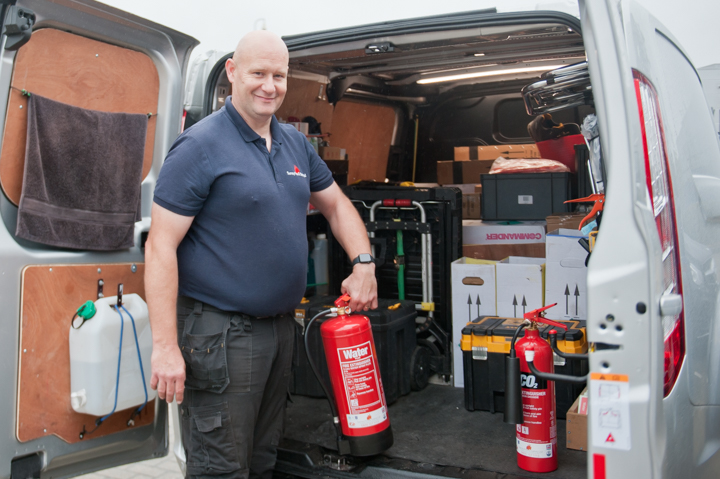
The Top 10 Tips For Warwick And Coverage Of Fire Extinguisher Service in Warwick
The Warwick and the service coverage of your fire extinguisher service provider significantly affects the quality, cost and reliability of the essential safety service you get. In the UK where compliance with the Regulatory Reform Order 2005 (Fire Safety) requires continuous and prompt maintenance, a provider's logistical and physical capabilities have a direct impact on their ability fulfil their contractual obligations as well as legal obligations. Consideration should be given to the response time, travel costs, cultural understanding, and regional differences in compliance when deciding between a large national company and a local expert who has expertise in the region. A provider's operational footprint–their depot Warwicks, engineer distribution, and territory management–determines whether they can offer genuine rapid response or merely theoretical coverage, making this a critical factor in ensuring your premises remain protected and compliant without suffering from excessive downtime or hidden charges related to geographic constraints.
1. National Vs. Local Provider Operational Models
The UK market is made up of multinational companies with extensive networks, and smaller, local-based specialists. The national providers typically work through regional depots with a distributed engineer's system. This provides brand consistency as well as the capacity to manage large, multisite contracts across the country. The benefit of national companies is their flexibility and often robust backups systems. Local providers are able to provide more customized services, greater knowledge of the region they cover (e.g. Southeast Scotland) and speedy response times within their core area of operation. The trick is to figure out whether a "national" provider really has a presence in your specific region or if your postal code is in the fringe of their coverage, which could lead to slower response times and more expensive cost for mileage.
2. The amount of engineers employed as well as the proximity of their Warwick to your postcode
The most crucial aspect in providing a practical service is having a regular engineer at your Warwick who's fully equipped. It is not enough for a provider to claim that they provide services across the UK if their nearest engineer lives just two hours away. Inquire: "Where are you located relative to the postcode we have?" Also "How many Engineers cover my geographical area?" A high level of engineer density in a particular region can result in shorter travel time, faster emergency responses and less cancellations of appointments because of unexpected delays or issues with work elsewhere.
3. The policy regarding mileage and call-out fees in Warwick
Policies on mileage directly impact costs. A transparent provider will have a clear policy detailed in their quotation. Many offer a number of miles "free" between and to the engineer's home or a local depot. After this point, there is a charge per mile. These charges can be substantial in rural and remote regions. It is crucial to get an estimate in writing of these potential costs dependent on the Warwick of your business. Certain local service providers do not charge for travel within the county's core. This can be a huge cost saving for businesses within that region.
4. Regional Compliance Nuances and Regulations
There are a few differences in the laws that govern the safety of firefighters in Great Britain. England and Wales is governed by the Regulatory Reform (Fire Safety) Order 2005. Scotland operates under Fire (Scotland) Act, 2005. This Act has several regulations and can have slight variations in the focus placed on enforcement. Northern Ireland has a separate set of laws. The service providers will have office staff and engineers who are experienced and skilled in regional particulars.
5. Multi-Site Contract Management and National Account Coordination in Warwick
The capacity of a service to offer seamless coordination of national accounts for companies with multiple Warwicks across the UK is vital. This requires a centralised account management team, working with a network that is synchronised of regional engineers. The company must be able to show an advanced communication and scheduling platform, that ensures a uniform delivery of services and pricing as well in unifying reporting. All of this can be performed from a single point of contact, no matter the place your site is located, in London, Manchester, Glasgow and so on. The headache of administrative management that is associated with managing several local contracts is removed.
6. Warehouse and Depot Infrastructure in Warwick
The physical infrastructure that a service provider has is an important measure of their ability to deliver services. Local depots aren't only administrative offices, they are vital logistic hubs that have stock of replacement extinguishers, parts, and other consumables. The engineer is able to replenish the depot quickly and most issues can be solved in the first visit. If the engineer is not able to get the required items, they might have to make a return visit.
7. Planning for the worst, and redundant engineers in Warwick
Plans for contingency are essential for sudden events, such as illness or annual leave. One provider may only provide an engineer to cover a vast geographical area. If the engineer responsible for your scheduled service is not available this could result in an interruption or delay in the delivery of the service by an engineer traveling across a large distance, which could compromise quality. However, a service provider with multiple engineers in an area has built-in redundancy. This ensures continuity of service and protects your business from lapses in compliance due to internal resourcing issues.
8. Urban vs. Rural Service Challenges
Rural and urban regions have different service needs. The difficulties in servicing central London buildings includes congestion charges for vans, as well as limited parking. These can all increase costs and complicate scheduling. Rural Warwicks have a number of difficulties, such as long travel times as well as limited access to engineers who need to update their job status. A service provider who has experience in your region will have the proper policies and pricing to address these challenges.
9. Verification of Claims Coverage through Client References in Warwick
A provider's marketing material may claim extensive coverage but it must be verified. Requesting references from local businesses is the most effective way to find out about the service offered by a company. Talking to similar local businesses can provide real-time information about the quality of service offered by the company: Was it prompt? Did the engineer live locally or not? Did you encounter any unexpected mileage costs? This due diligence provides you with actual evidence to either confirm or refute the provider's claims about its capabilities within your locality.
10. Guarantees on contracts based on geographical performance in Warwick
In the end, any coverage guarantee should be backed by contractual terms. Service Level Agreements should include performance metrics for geographical regions. For instance, the SLA can ensure that maintenance scheduled service will be handled by an engineer located in a specific region or guarantee that an emergency call out will be responded to within a given time from an identified local depot. By including these KPIs it is possible to formalize the provider's claims of coverage and have recourse in case their service and performance does not match their promises. Check out the top fire extinguisher servicing in Warwick for blog advice.